

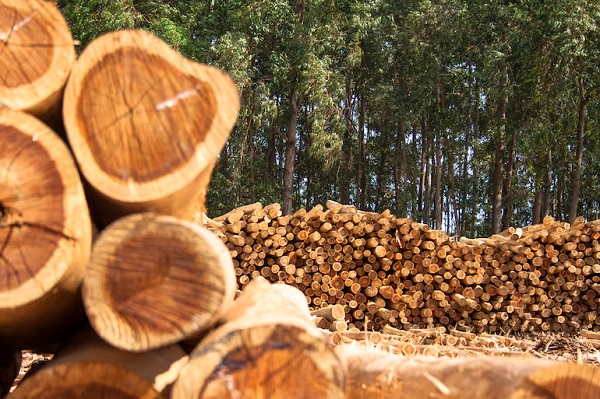
Paraguay’s timber industry is undergoing rapid growth, driven by favorable policies and rising international demand. The Paraguayan Federation of Timber Producers (Fepama) highlights a promising outlook, with 250,000 hectares of forested land already generating USD 100 million in exports during 2024. An additional 30,000 to 40,000 hectares are being added annually.
Fepama president, Manuel Jiménez Gaona, noted that both foreign investors and domestic producers are focusing on reforestation and wood industrialization. A stable legal framework and incentives—such as forest carbon credits and timber growth schemes—have created a competitive environment for international capital.
According to the Ministry of Industry and Commerce’s economic acceleration strategy for 2035, the forestry sector is ranked third among strategic priorities. The plan estimates that timber will contribute USD 775 million to the economy, with a projected impact of USD 818 million on GDP and the creation of 67,000 new jobs.

Paraguayan forestry exports in 2024 reached USD 100 million, with 80% coming from charcoal and 20% from processed wood in various forms. The domestic market remains a key consumer, particularly in the energy sector for industrial boilers and grain dryers.
Roughly 98% of processed timber comes from eucalyptus plantations, underscoring a shift toward sustainable production without heavy pressure on native forests. These plantations are spread across the eastern region, from Concepción and Amambay to Itapúa and Ñeembucú, with potential to reach 3 million hectares.
The forestry industry currently provides around 20,000 direct and over 60,000 indirect jobs, mainly in rural areas, becoming a decentralized driver of economic growth. Over the last five years, more than USD 200 million in private investment has flowed into sawmills, biomass plants, and high-tech nurseries.
Follow us on Instagram.
Exports remain dynamic, led by three main products: charcoal sent to Germany, the UK, and the US; plywood shipped to Portugal, the US, and Italy; and sawn wood exported mainly to China, which recently received a single shipment worth USD 1.15 million.
One major challenge is complying with the European Union’s Regulation 1115, which requires traceability and environmental certification. Fepama assures that accurate records maintained by the National Forestry Institute will allow Paraguay to meet these standards, ensuring continued access to key markets such as the United States, Brazil, Argentina, Uruguay, and Europe.
El articulo en español aquí.